
THC is the cannabinoid that makes you high. CBD does not make you high, but it is not inactive either. Both come from the cannabis plant and share the same chemical formula (C21H30O2), with the atoms arranged differently. THC activates the brain’s CB1 receptors, which causes the intoxicating effect. CBD barely activates them, yet it still acts in the brain and can change how your body processes THC. So the useful question is not “CBD or THC?” but “how much of each?” Every Cannovo product lists both numbers, backed by an independent lab test for each batch.
The most common misconception we hear from customers is that CBD and THC work completely independently of each other. It usually comes in two forms: “CBD is totally non-psychoactive, so it does nothing in the head”, and “THC is only for getting high and has no medical value”. Neither is accurate. Below, we explain what the research actually says, and how that maps onto the 70 products we stock.

In this article
- What is the difference between CBD and THC?
- Is CBD psychoactive?
- Does CBD cancel out THC?
- Does THC have medical value?
- CBD-dominant, balanced or THC-dominant: what do the ratios mean?
- Can CBD products show up on a drug test?
- CBD vs THC: which should you choose?
- FAQ
What is the difference between CBD and THC?
THC (delta-9-tetrahydrocannabinol) is intoxicating. CBD (cannabidiol) is not. Most other differences follow from that one.
| CBD | THC | |
|---|---|---|
| Makes you high? | No | Yes |
| Acts in the brain? | Yes, but without intoxication | Yes, mainly through CB1 receptors |
| Effect on the other | Can slow how the liver breaks down THC at high oral doses | Drives the main felt effect in mixed products |
| Abuse potential (WHO) | None found for pure CBD | Yes; under international drug control |
| Approved medicines exist? | Yes (prescription only) | Yes (prescription only) |
| Shows on a THC drug test? | Not CBD itself, but CBD products can contain THC | Yes |
| In our range | 19 CBD-dominant products | 48 THC-dominant products, 3 at exactly 1:1 |
Is CBD psychoactive?
CBD is not intoxicating, but calling it “non-psychoactive” goes too far. The more precise word is non-intoxicating: it does not cause a high, impair you the way THC does, or create a risk of dependence.
- What the WHO found: after a full review in 2018, the World Health Organization’s drug experts concluded that pure CBD “was not found to have psychoactive properties, and presents no potential for abuse or dependence” (WHO Expert Committee on Drug Dependence). In drug-control language, “psychoactive” means intoxicating with abuse potential, the way THC is.
- Why CBD still counts as active in the brain: a purified-CBD prescription medicine was authorised in the EU in 2019 for seizures in two rare forms of childhood epilepsy (The Pharmaceutical Journal). A substance with no effect on the brain could not do that.
- How it differs from THC at the receptor: lab research shows CBD does not switch on the CB1 receptor the way THC does. It binds to a different site and can dampen the receptor’s response (Laprairie et al., British Journal of Pharmacology, 2015).
So CBD does something in the head. It just does not make you high.
Does CBD cancel out THC?
Not in the way most people think. CBD and THC do interact, which is exactly why they are not independent. But the popular idea that adding CBD “softens” or “cancels” a THC high is not supported by the best human studies.
- Inhaled, at common ratios: no measurable softening. In a randomised, double-blind trial, 46 healthy adults vaporised cannabis with 10 mg THC plus 0, 10, 20 or 30 mg CBD (ratios up to 3:1). CBD did not reduce THC’s effects on memory, psychotic-like symptoms, how high people felt or heart rate (Englund et al., Neuropsychopharmacology, 2023).
- Eaten, at a very high CBD dose: THC got stronger. In another randomised trial, 18 adults ate brownies with 20 mg THC, with or without 640 mg CBD. With CBD, people felt more intoxicated, performed worse on cognitive tests and had a higher heart rate. The likely reason: CBD slowed the liver enzymes that break THC down (Zamarripa et al., JAMA Network Open, 2023).
The practical lesson: judge any product by its THC content, whatever CBD it also contains. A 1:1 gummy with 5 mg THC is gentle because 5 mg of THC is a low dose, not because the CBD cancels anything.
Does THC have medical value?
Yes. THC-containing medicines are prescribed in Europe, which is the clearest sign that THC is more than a recreational substance.
- A 1:1 THC and CBD mouth spray is authorised as a prescription medicine in several European countries, including Germany.
- Since March 2017, doctors in Germany can also prescribe medical cannabis flower and extracts. The most frequently prescribed cannabis medicine there has been dronabinol, which is pure THC (BfArM, Germany’s federal medicines agency).
Important: these are prescription medicines made and dosed under medical supervision. Cannovo’s products are not medicines and are not intended to diagnose, treat or prevent any condition. If you are considering cannabis for a health reason, talk to a doctor.
CBD-dominant, balanced or THC-dominant: what do the ratios mean?
The ratio of CBD to THC tells you more than the word “CBD” or “THC” on a product name. Here is how our own 70 products split.
| Type | Products in our range | Example | What to expect |
|---|---|---|---|
| CBD-dominant | 19 | Harmony CBD flower: CBD 18%, THC 0.2% | No high. Some still contain small amounts of THC. |
| Balanced (1:1) | 3 | Evening Berry Gummies: 5 mg THC + 5 mg CBD | A mild high set by the THC dose. |
| THC-dominant | 48 | Level Ground flower: THC 15%, CBD 4% (our mildest THC strain) | A clear high. Strength depends on the THC figure. |
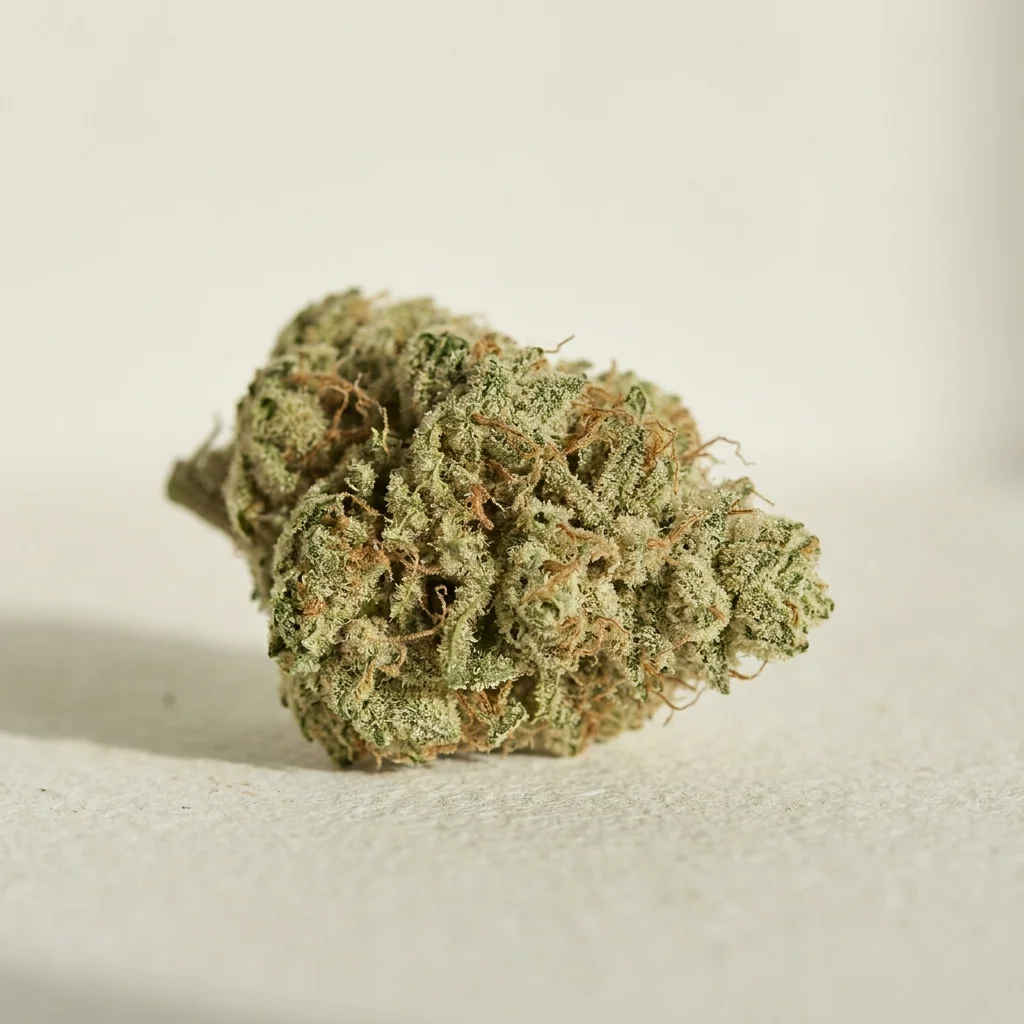
Our highest-CBD flower, with floral, earthy aromas and only a trace of THC. Lab-tested, 3.5 g.
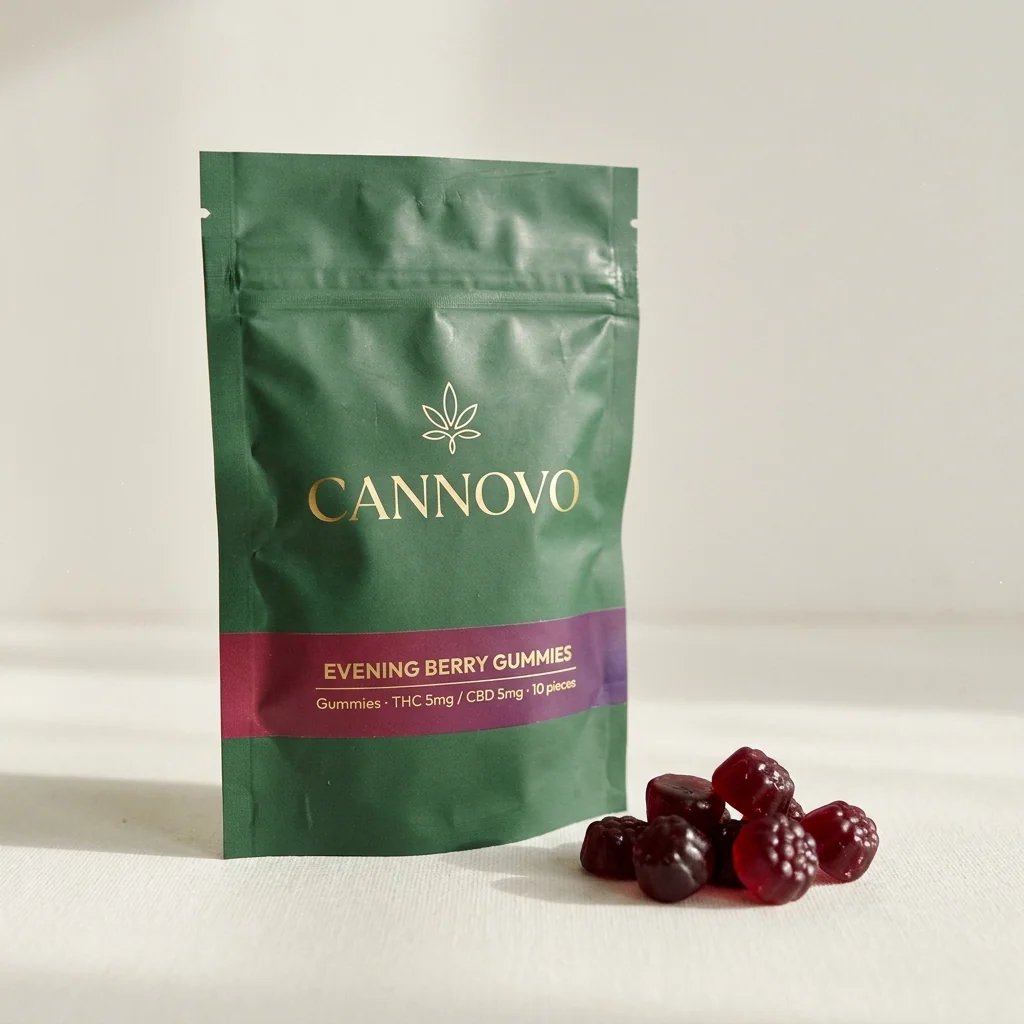
Low-dose, vegan berry gummies. One piece is a sensible first serving. 10 pieces.
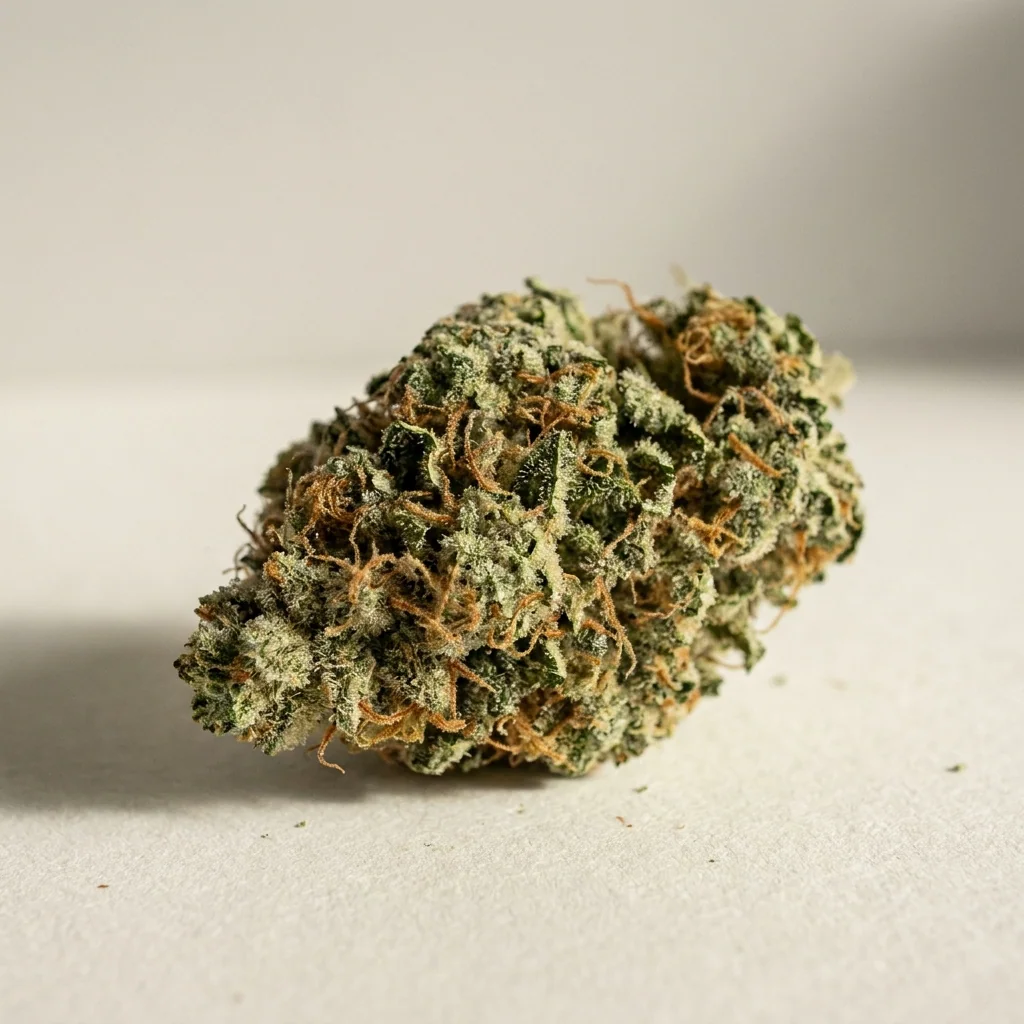
The lowest THC level of any strain we stock, with fresh herbal notes. Lab-tested, 3.5 g.
Can CBD products show up on a drug test?
CBD itself is not what standard drug tests look for, but many CBD products contain some THC, and that can be enough.
- In a small controlled study, 2 of 6 adults tested positive on a standard urine test after vaping CBD-dominant cannabis that contained just 0.39% THC (Spindle et al., Journal of Analytical Toxicology, 2020).
- For comparison, our Harmony CBD flower contains 0.2% THC and our Charlotte Calm CBD flower 1%. “High-CBD” does not mean THC-free.
- Full-spectrum CBD oils, such as our Daylight Drops, keep the plant’s other compounds and can contain small amounts of THC.
If you are tested at work or on the road, assume that any cannabis product, including CBD, could cause a positive result. Check the lab certificate for the exact THC content of your batch.

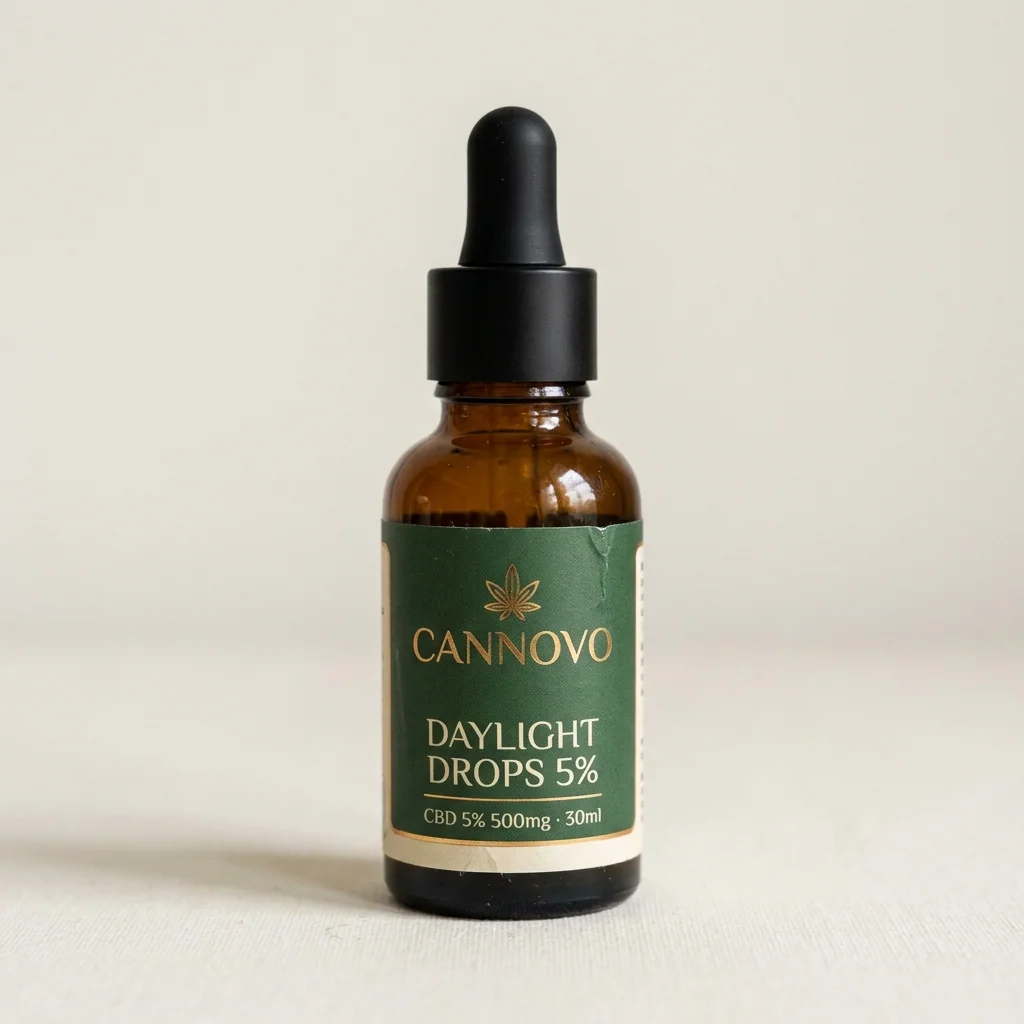
Our lowest-strength CBD oil and the usual starting point for people new to CBD. 30 ml.
CBD vs THC: which should you choose?
Start from what you want to feel, then read the numbers.
- You want no high at all: choose a CBD-dominant product such as Harmony CBD flower or a CBD oil. Remember that most still contain traces of THC.
- You are new to THC: choose a low, measured dose. A 1:1 gummy with 5 mg THC, such as Evening Berry Gummies, is a common starting point. Edibles can take 30 minutes to 2 hours to start working and up to 4 hours for the full effect, so wait before taking more (Health Canada).
- You know THC and want flower: pick by THC percentage and terpene, not by the indica or sativa label. Our guide Indica vs Sativa vs Hybrid explains why, and our dried flower range lists both numbers for every strain.
- You want CBD to make strong THC milder: do not count on it. Choose a lower THC level instead.
Is it legal where you live? Rules for both CBD and THC differ from country to country and change often. Check the current law in your country before you buy. We sell to adults aged 21 and over, in permitted markets only.
Frequently asked questions
Does CBD get you high?
No. CBD does not cause intoxication, and the WHO found no abuse or dependence potential for pure CBD. A CBD product can still contain small amounts of THC, so check the lab values.
Is CBD or THC stronger?
They are not stronger or weaker versions of the same thing. THC produces the high, so it is the number that sets how intense a product feels. CBD percentages do not translate into strength in the same way.
Does CBD reduce the effects of THC?
The best evidence says no, at least at the ratios found in most products. In a 2023 trial, inhaled CBD at up to three times the THC dose did not reduce THC’s effects. At very high oral doses, CBD even made THC feel stronger.
What does 1:1 mean on a cannabis product?
It means equal amounts of THC and CBD, for example 5 mg of each per gummy. The THC amount decides how strong it feels.
Can you use CBD and THC together?
Many products already combine them, such as our 1:1 gummies and tincture. Because CBD can slow how the body breaks down THC, treat a combined product as at least as strong as its THC content suggests. This is general information, not medical advice.
Know exactly what is in your product
Every Cannovo product lists its THC and CBD content, backed by an independent lab certificate for each batch.
Free shipping over €75 · 10% off crypto payments · 21+ only, permitted EU markets
By Marlon Krompholz, Pharmacist, Cannovo · Last updated: 8 October 2026
